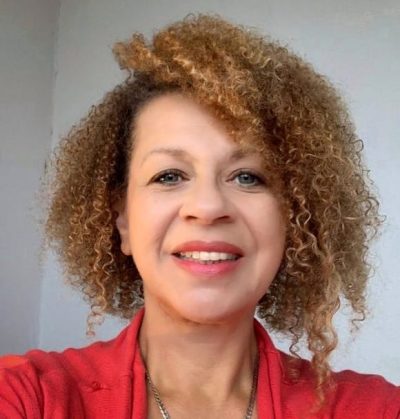
Hello, I’m Maggy Burrowes, welcome to my website
My ongoing project is to organise this website into both an information hub for all aspects of The Feldenkrais Method® and a continuously-developing resource for anyone interested in exploring on-going personal growth, and maturing into their most fully potent self.
If you would like regular updates about all my classes and workshops you can sign up for my newsletter here…
What’s coming up Online…
‘Daily Class’ Immersive Courses
…are currently on hold until Summer
Once a month I usually teach a week-long course of daily classes – these are currently on hold, and will be resuming in June with a series of Summer Schools.
Why Come Along To An Immersive Class?
I am keen to make the benefits of regular lessons available to as many people as possible, so once a month I teach a week-long course of daily classes on a particular theme, and in the Summer I teach two Summer Schools, one with a general theme and one with a vocal theme.
You do not need to be able to make it to every class in order to sign up for my immersive daily courses – if you miss a particular session you will have the opportunity to catch up before the next one, as you will receive your recordings and any extra materials I am providing each day as we go along. This means you are welcome to simply join us whenever you are free throughout the week.
You are also welcome to sign up to receive the Course recordings and extras even if you are not able to join us live at all. I am scheduling intermittent Q&A sessions on Zoom in different time slots, with the intention of giving more people access to the individual attention which I am keen to include as an essential element of all my online teaching. Please note I am always happy to respond to individual voice-message questions on WhatsApp. Please do get in touch with me if you would like to chat about any of my classes, or to make a booking.
Potent Voice Sunday Classes
Potent Articulators
Intensity, Clarity & Rhythm = Consonant Power!
April 21st
Online + Recordings & Notes
2 pm – 5 pm BST [9 am – 12 pm EDT]
£40 (suggested fee, or any donation welcome)
You are welcome to sign up to receive the recordings if you cannot join us live!
In this workshop we will be exploring all the various consonant sounds – voiced and vibrant, voiceless and airy, fricative and sustainable, abrupt and plosive, guttural and deep – as powerful approaches to freeing up tensions in our lips, tongue, face, jaw, and inner throat.
One simple way to understand how the human voice works is to recognise that vowel sounds are vibratory, melodic, and sustainable by their very nature – perfect for expressing the universal language of deep feeling and empathy – and that consonants turn that stream of pure emotion into actual language, transforming sound waves into coherent communication. Consonants provide the punctuation, the staccato, the syncopation that infuses voice with the pulsating rhythms that enable us to synchronise our actions, within and without; to breathe and move in harmony with each other, both emotionally, and physically.
Join us and experience for yourself the way that lively and responsive articulators form part of the physical foundations of our natural rhythm, resonance and vocal intensity, in both speech, and song.
These workshops will be beneficial for:
Singers, presenters, performers, and anyone interested in the voice, and any aspect of self-expression
Anyone dealing with chronic tension in the face, jaw, and throat
Anyone interested in meditation, chanting, and neural self-regulation
Please do contact me with any questions you may have, and note that BOOKING IS BY EMAIL, so you can contact me via this link if you want to reserve your place for any of my online events.
You are also always welcome to sign up for the recordings and notes of any course should you be unable to join us live.
New local class…
The Telegraph Hill Centre
Next Saturday Class – April 20th
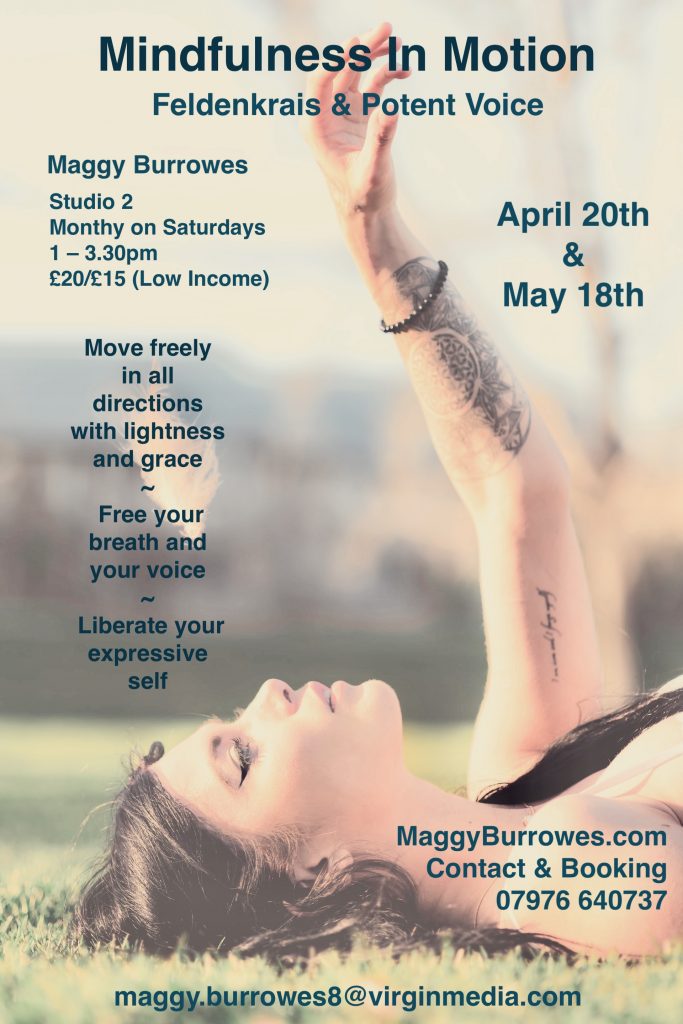
This is a monthly Saturday class designed to give you the opportunity to experience Awareness Through Movement combined with experimental vocal sounds in a mindful, playful, joyful way.
Feldenkrais Awareness Through Movement classes teach you to access your innate capacity for changing your brain – known as ‘neuroplasticity’ – and thus improve your ability to both learn new skills and to unlearn old habits you would like to leave behind.
My Potent Voice work is designed to enable you to access your breath and your full voice in a more spontaneous and organic manner.
Combining the two allows you to more effectively “embody” the way you express yourself, both physically and verbally, and over time you will begin to develop a more immediate and more authentic relationship with all sensory messages coming to you from your internal and external sensory systems, through your muscles, your fascia, your breathing, your skin, your balance, your ears and eyes, and, with practice, from your solar plexus, your heart, and your centre of gravity deep in the abdomen and also known as ‘the hara’. As your perceptual capacity increases you will also become better able to access your ability to self-soothe whenever you are experiencing anxiety or distress.
More dates for your diary–coming soon…
May 19th– Potent Voice – 2-5pm BST–Details TBC
June 23rd – Potent Voice – 2-5pm BST – Details TBC
…All online sessions include recordings and notes. For more details click here for workshops, and here for regular classes…
More About Feldenkrais
Learning To Learn…
Feldenkrais (fell-den-cry-s) is all about increasing our awareness of self, expanding our capabilities, taking charge of our own continuing development as an adult, and realising our full potential.
When we fully embrace our capacity for both neuro- and bio- plasticity (new terms for our uniquely human capability for life-long mental and physical self-improvement) the day-to-day living of life gets better rather than worse as we get older, because our self-awareness, our self-knowledge, and our self-mastery continue to develop. As a practitioner my goal is to enable as many people as I can to experience the benefits of “learning to learn” in this way.
Here’s why Feldenkrais is different…
There are two ways to learn Feldenkrais…
Functional Integration
In our hands-on teaching sessions – Functional Integration – at first the experience can seem similar to having a ‘treatment’ of some sort, such as osteopathy, chiropractic, or one of the more gentle forms of massage. After a few sessions as your sensitivity develops, it becomes more natural to learn directly through your sensory-motor experience again, just as you did as a young child. People often choose private tuition when they have severe movement issues or neurological conditions. Private sessions are also more appropriate for babies, children, and younger people with motor and/or learning difficulties.
Awareness Through Movement
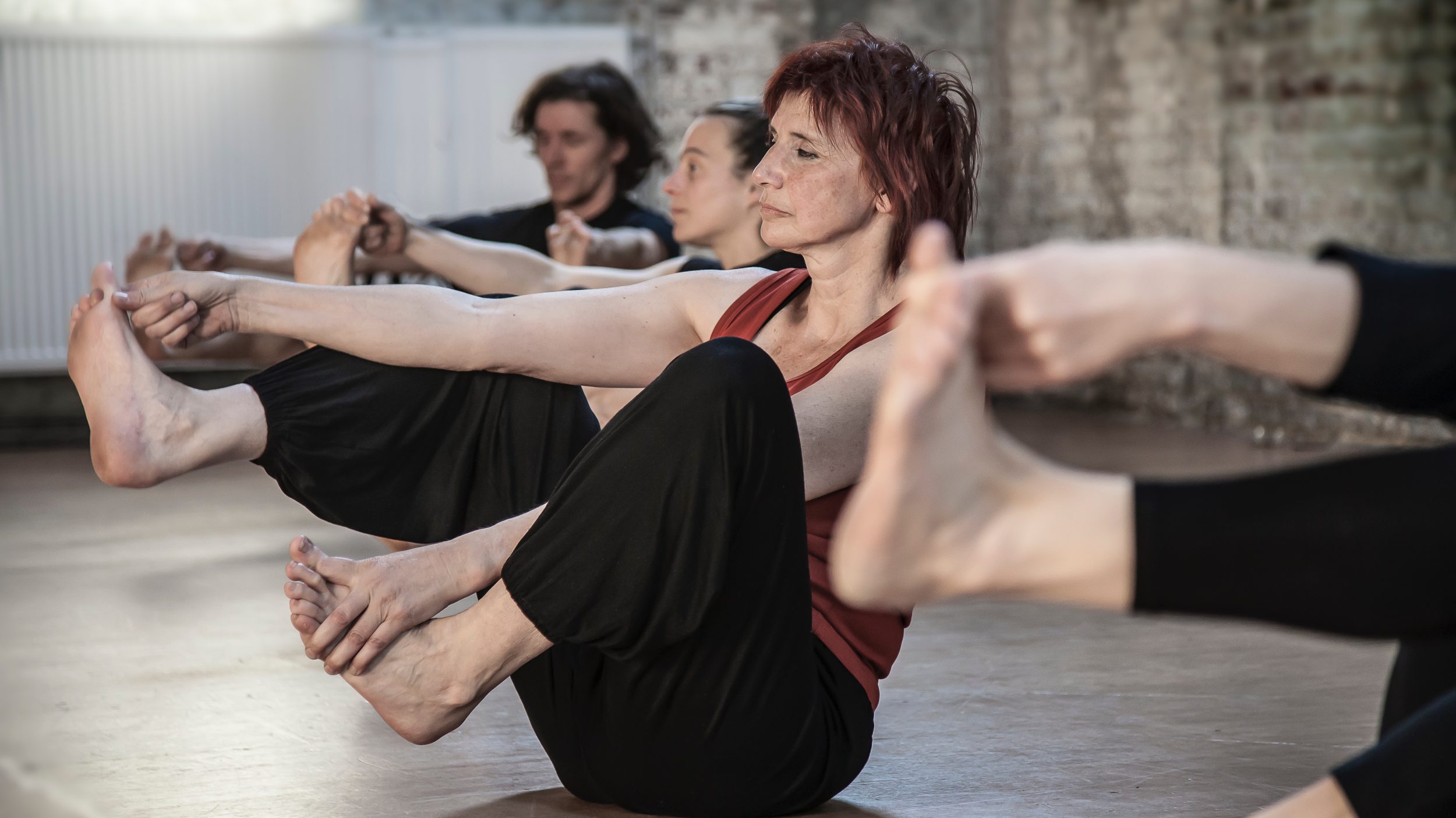
In our group classes – known as Awareness Through Movement – it can take a while to realise that what you are learning is very different from other movement classes you have taken in the past.
Unlike classic Hatha Yoga and similar techniques we do not encourage active stretching, and the improvements come as you learn to move with an expanded consciousness of your own sensory-motor awareness
Unlike Pilates we continually encourage releasing the abdomen throughout our movement sequences.
The process is closer to training in an individualised form of a martial art, and if you have trained in Tai Chi, Aikido, or Judo, you will recognise many similarities in both the movements and the style of teaching.
There is no one right way to do the lessons…
We Feldenkrais teachers have access to hundreds of Awareness Through Movement lessons, and we are always devising more – and when teaching all these distinct movement sequences, we constantly emphasise that there are very many ways to perform any natural movement, so there is no need to strive to maintain a “correct” version of self-use, an idea that is often associated with the concept of having good “posture”. Instead we encourage the ongoing practice of self-observation-in-motion, preferably on a daily basis, with the intention of steadily improving our self-organisation through the expansion of our self-knowledge.
What we do share with more traditional therapists is the intention to release those we are teaching from their self-limitations; from undetected and unrecognised areas of blockage and “stuck-ness”.
The goal is to enable anyone who desires to do so to rewrite the unconscious rules that have been governing their lives, often since early childhood. The group lessons may be more general in focus, but they also promote this self-development goal, and are an ideal way to work with, and benefit from, Feldenkrais strategies in the longer term.
Functional Integration – why choose private tuition?
Because of the natural confusion with hands-on therapy, many people only consider exploring Functional Integration® once they are in pain, which is a pity, as it is usually the case that issues with mobility come first (our sense of balance can begin to deteriorate in our 20s, long before we notice the effect this loss is having on our capabilities).
Movement issues are a useful early indicator that we would benefit from less habit and more choice in the way we are going about our day-to-day lives. Moreover, as the long-term goal of Functional Integration is to heighten our sensitivity and refine our ability to sense our selves in action, in order to develop the natural human capacity for learning and self-maturation, there really is no need to wait until you feel there is anything “wrong” – Feldenkrais is useful when you are learning a new skill, or mastering an art, or just looking for ways to enjoy your life even more.
Awareness Through Movement classes are a very affordable way to find out if the Method is for you…
…however please note that you will usually need to be able to lie on the floor for a minimum of 50 minutes, and, as each lesson is unique and engages the whole physical self, it may be a challenge for the teacher to find a suitable group lesson that you will be able to perform if your movements and/or your ability to lie on the floor are severely limited due to acute or chronic pain.
If that is your situation I have two effective options:
First, I offer discounts for regular hands-on lessons booked in batches, to make them as affordable as possible. I am now offering hands-on lessons again, however if you are wary of working together in a live situation then 1-2-1 lessons online are still very effective for anyone with severe movement issues, plus working on Zoom has the added benefit of the lesson being recorded, so you can build your own personal archive of Feldenkrais strategies for continuous ongoing self-improvement at home.
I also have a special lockdown pricing scheme in place that means you can learn how to “Feldenkrais” with me in any format, for whatever you can comfortably afford. Whether live or online, individual lessons always include mini movement sequences to practise at home, to help you maintain and continue your improvement between our sessions.
Secondly, I have refined the aspects of Feldenkrais that have helped me to reverse all my chronic pain, and I am teaching a weekly evening class – Potent Inner Voice – that focusses on transferring this aspect of my teaching as efficiently and effectively as possible to you, the learner. I have written several articles on the background to these processes, which overlap with classic Feldenkrais Awareness Through Movement, my Potent Voice work, and my Quintessensual Consciousness course for honing and refining five sensory systems. I have written specifically about some of the science behind the class in this article, and will be writing more as I find the time.
Awareness Through Movement Online
Regular Weekly Classes
I have three regular classes: pure Awareness Through Movement at 12 noon on Tuesdays, and 6pm on Thursdays. You can join either or both classes at any time (the online equivalent of a drop-in class); plus Potent Inner Voice, an extended class in Feldenkrais-informed Meditation practices on Wednesday evenings. All the details of my ongoing weekly classes are here.
I am also running online workshops on various themes, and I offer a wide array of possibilities for exploring individual Functional Self-Integration and Potent Voice online. I am particularly enjoying how working on Zoom enables me to record and share lessons with all my students.
Use the contact information on this page to ask me any questions or make a booking.
Movement Is Life!
Telegraph Hill Centre – Studio 2
Kitto Road, SE14
Drop-In Class – Wednesdays 4 – 5.15pm
£12.50 / £10
“Movement is all important. From cardiovascular health, bone density, joint functioning to central nervous system optimisation. For the health of each and every cell in your organism, to your mental wellbeing and overall happiness. Movement is life. And life is movement!“
Rodolfo R. Llinás, MD, PhD
…but the phrase was a big favourite with Moshe Feldenkrais as well – I wrote a blog post about it…
Live class, extra info: I have enough mats and head rests that you do not need to bring your own, however in our current situation I would prefer you bring along a clean sheet or towel to lay over your mat and any headrests you might use, until our current covid-19 precautions become unnecessary. Do bring anything else you need to make sure you are comfortable on the floor – some people like to bring an extra-soft pillow or a blanket with them. The space is lovely, with big windows but also well-supplied with radiators; as the class is now in the daytime we should not have any heating issues, nevertheless it may be worth bringing a couple of layers with you if you tend to get chilly when you relax.
Customised Workshops for Companies & Organisations
I am always happy to design a workshop for a specific purpose – good ergonomic self-use for office workers, good vocal self-use for performance communities, good performance skills for everyone – contact me to discuss what you would like.
Feldenkrais International on YouTube
The International Feldenkrais community have been producing some attractive films to promote what is still a not very well known process with enormous benefits to offer. If you would like see the whole series in English click here. If you would like to see the full International Feldenkrais Federation film collection, which is available in multiple languages, click here view the YouTube Channel.